| TUESDAY, APRIL 21, 2026 | 10:15 – 11:15 AM |
| Six Practical Design Principals for Modernizing Classrooms |
| |
RCA
As school districts navigate aging facilities, evolving instructional models, and increasing pressure to maximize every dollar, modernizing classrooms requires more than new furniture or technology—it requires intentional design aligned to how students learn today. In this session, Lakeshore Learning’s Director of Learning Environments will share six core principles for modernizing classrooms that support flexibility, equity, collaboration, and student-centered instruction. Drawing from real-world district partnerships and project-based experience, this presentation connects educational vision with practical design strategies that can be applied in new construction, renovations, and phased refreshes. Participants will explore how thoughtful learning environment decisions—grounded in pedagogy, space planning, and fiscal responsibility—can improve student engagement, support educators, and extend the life and impact of existing facilities.
Learning Objectives:
- Identify six key principles that define modern, student-centered classrooms
- Connect instructional goals to flexible, scalable learning environment solutions
- Understand how design choices can support equity, collaboration, and varied learning styles
- Apply practical strategies for modernization within existing budgets and facilities constraints
 Kevin Fadely, Director of Learning Environments, Lakeshore Learning Materials
Kevin is an experienced thought leader with a comprehensive background in designing and supporting effective learning environments within public schools, spanning from early childhood/head start programs through high school. With over 30 years of experience he has worked across various grade levels, implementing differentiated learning strategies to meet the diverse needs of today’s students. He is passionate about fostering inclusive, engaging, and collaborative classroom cultures, focusing on both academic excellence and social-emotional development. He has consistently collaborated with multidisciplinary teams to support at-risk students, enhance curriculum delivery by using the space as an active tool to cultivate an inspiring culture into the classroom. From his time guiding early learners through foundational skills to challenging high school educators and students to reach their full potential, Kevin believes in creating spaces where all students feel valued and equipped for success.
|
| Big Impact, Small Bucks: Leveraging Incremental School Design for Systemwide Change |
| |
RCB
Across the country, school divisions are being asked to do more with less – aging buildings, limited capital funding, and growing expectations for learning environments that support equity, innovation, and belonging. While large-scale renovations and new construction often dominate the conversation, meaningful transformation can also begin on a much smaller scale. This session explores nearly a decade of collaboration between VMDO Architects and Charlottesville City Schools (CCS), where a series of modest, targeted design interventions across six elementary schools produced outsized impacts at the classroom, school, and community levels. These “small wins” not only improved day-to-day learning environments but also helped educators and families see new possibilities – building momentum that ultimately supported the largest facilities reinvestment in the district’s history. Beginning in 2017, VMDO partnered with CCS to assess capacity, facilities conditions, and future needs. Like many districts, CCS had long focused on maintaining aging facilities and making the best use of what was available. Rather than waiting for comprehensive renovations that felt distant or uncertain, CCS leadership chose to invest strategically in incremental improvements at each elementary school – projects that could be realized quickly, visibly, and in direct response to educational needs. These interventions were intentionally small in scope and budget, but high in impact:
- a fourth-grade learning community renovation at Jackson-Via Elementary;
- a maker space at Sunrise Elementary;
- a renewed media center at Greenbrier;
- an outdoor roof terrace classroom at Tall Oaks;
- classroom and library enhancements at Summit Elementary;
- and school-wide refreshes through furniture, lighting, finishes, paint, and graphics.
Each project focused on a specific opportunity identified by school leadership and staff – spaces where design could better support how teaching and learning were already happening. The design approach emphasized focused spaces, daylight, flexibility, and identity, demonstrating how thoughtful choices can stretch limited dollars. Equally important was the process. Principals, teachers, and in some cases, students were active participants in shaping priorities, clarifying needs, and defining what success would look like for their school community. Through this collaboration, educators were able to articulate aspirations that had long existed but had never been physically realized. Co-presenter Dr. Elizabeth Korab – former principal of Sunrise Elementary and current planning principal for Charlottesville’s future centralized preschool center – will share an educator’s perspective on this work. Drawing from her experience leading the Sunrise Maker Space renovation, Dr. Korab will discuss how authentic staff voice, shared ownership, and visible results can transform an aging space into a fresh, responsive learning environment – one that affirms educators’ creativity and supports student engagement.
Over time, these incremental projects reshaped how facilities were discussed and valued within the district. As more spaces were refreshed and reimagined, the community gained a clearer understanding of what well-designed learning environments could offer. Those early successes helped establish a common language around quality, equity, and possibility, laying the groundwork for more ambitious planning. Today, that momentum has contributed to major initiatives now underway or in planning, including the creation of a unified Charlottesville Middle School and a new centralized preschool center. While this presentation will briefly acknowledge those larger efforts, its primary focus remains on the small-scale interventions that made them possible – demonstrating how incremental investment can serve as a bridge between past constraints and future opportunity. This session is intended for architects, planners, students, teachers, and administrators seeking practical strategies for achieving meaningful impact when resources are limited. Attendees will leave with actionable insights into how small, well-designed projects – rooted in collaboration and educational vision – can elevate daily learning experiences, strengthen school identity, and build momentum toward long-term transformation.
Learning Objectives:
- Identify and prioritize small-scale school design interventions that deliver meaningful educational impact while operating within constrained capital budgets.
- Evaluate how incremental design projects can elevate existing learning environments and help educators and communities recognize new possibilities for teaching and learning.
- Apply collaborative design processes that meaningfully engage principals, teachers, and students, translating school-level priorities into focused, high-impact learning spaces.
- Leverage early design successes to support long-term facilities planning and investment, using small projects to inform larger capital initiatives and district-wide vision.
 Ben Thompson, LEED BD+C, Senior Associate / Senior Project Designer, VMDO Architects
Ben is a Senior Associate and Project Designer at VMDO Architects with over 20 years of experience designing high-performing K–12 learning environments. Known for his clear design vision and collaborative approach, Ben has spent the last 15 years at VMDO leading projects from early concept through completion, including work for Charlottesville City Schools, Norfolk Public Schools, and the Department of Defense Education Activity (DoDEA). Ben has worked closely with Charlottesville City Schools for nearly a decade and served as the lead designer for Charlottesville Middle School. His work emphasizes incremental, high-impact design strategies that align educational vision with available resources, helping schools achieve meaningful transformation through collaboration and thoughtful design.
 Dr. Elizabeth Korab, Planning Principal, Charlottesville City Schools Preschool Center, Charlottesville City Schools
Dr. Elizabeth Korab is the planning principal for Charlottesville City Schools’ future centralized preschool center, opening for the 2026–27 school year. Previously, she served as principal of Burnley-Moran Elementary (now Sunrise Elementary), where she led several school-based improvement initiatives, including the creation of a Maker Space in collaboration with VMDO Architects. Dr. Korab has served Charlottesville City Schools since 2016 as an instructional coach and principal, with prior experience as a classroom teacher and assistant principal. Her doctoral research focused on early childhood literacy and family engagement. In her current role, she is guiding the planning of classroom configurations, operations, and learning environments to support early learners and their families, bringing an educator’s perspective to both small-scale school improvements and district-wide transformation.
|
| The Renaissance of CTE, How the Classroom of Today Truly Prepares Students for an Amazing Future |
| |
RCC
Learning Objectives:
- Why is CTE seeing a renaissance? Describing the changing career climate and how schools need to adapt.
- What is changing the careers or the education or both?
- How is the CTE lab/classroom changing to adapt to the existing/new career options?
- What is the expected outlook in Virginia and beyond?
Dr Michael Brown, Director of Facilities, Montgomery County Public Schools
Megan Atkinson, ED.S., Career & Technical Education & Business Partnerships Administrator, Montgomery County Public Schools
 Joshua Bower, AIA, Principal, Director of Architecture, Crabtree Rohrbaugh & Associates Inc
|
| TUESDAY, APRIL 21, 2026 | 11:45 AM – 12:45 PM |
| A Historic Icon is Modernized: William Fox Elementary School |
| |
RCA
A three-alarm fire and subsequent weather damage greatly damaged an iconic school in Richmond’s Fan District. The school’s presence and role in the lives of the neighborhood and all Richmonders was irreplaceable and a new building was not an option. Quinn Evans was tasked with restoring the school, preserving the historic character of the classic design (along with the spirit of community, creativity, and love that had been infused into the building by 100 years of avid learners and teachers) and bringing it up to 21st-century educational standards. New and existing finishes and details were blended and executed in ways that both respected the original design and served the modern needs of a school. New building systems—from plumbing to security—were implemented throughout. Contemporary school operations were integrated into a historic building where security and technology infrastructure were not original design parameters. Standards from the VA Department of Historic Resources from pursuing Historic Tax Credits (a rarity for school project) resulted in preserved and restored windows, wall and ceiling trim, floors, etc, sometimes in unexpected ways. In this session, school leadership and Quinn Evans designers and RPS leadership will reveal and celebrate features and concepts covered over from a century of students and teachers occupying the school building.
Learning Objectives:
- Learn about the considerations and compromises for inserting modern learning environments into an existing and historic school.
- Demonstrate how characteristics of a building contribute to positive wellbeing of students, staff, and visitors.
- Learn which strategies were incorporated into the building that provide a security and a sense of safety while maintaining an open and welcoming environment.
- Discuss the value to a community and city of preserving an iconic, historical school building.
 Lauren Comet, CID, LEED AP, Senior Interior Designer, Quinn Evans
Lauren is a Senior Interior Designer with Quinn Evans and has a focus on schools and public libraries. She received her Bachelors of Interior Design and Master of Architecture from University of Tennessee, Knoxville, and spent the first 17 years of her professional career in Nashville, TN. The Virginia native moved back to Richmond in 2022 and has since volunteered with several local non-profits. She was the interior designer of William Fox Elementary School.
 Jack Hasten, AIA, Senior Project Manager, Quinn Evans
Jack is a Senior Project Manager and Architect with a Bachelor of Architecture/Renovation from Virginia Tech. He has a forty-year career with a focus on educational design across Virginia. Jack led Quinn Evans’ construction administration phase of William Fox Elementary School.
|
| Getting to Yes with Less: Elevating Educational Experiences in an Urban School District |
| |
RCB
Achieving lasting design excellence amidst budgetary and logistical constraints is a goal shared by school districts nationwide. Through its modernization program, DCPS delivers flexible, cost-effective learning spaces that satisfy stakeholder needs without sacrificing architectural integrity. By redesigning underutilized areas into multi-use spaces, forming partnerships with DC Parks and Recreation, and prioritizing stakeholder engagement, DCPS produces future-proof modernizations that maximize resources and programs on tight urban footprints. Built three decades apart, Drew Elementary and Adams Education Campus exemplify the ways in which logistical constraints can inspire innovative design. For instance, both schools reimagine traditional single-use big box spaces—such as separate cafeterias, gyms, and auditoriums—into innovative dual-purpose spaces. At Adams Education Campus, the school consolidates the auditorium into a versatile cafetorium to accommodate a wide range of uses amidst spatial limitations. At Drew Elementary, the school explores the untapped potential of circulation spaces as collaborative hubs. When designed intentionally, these transitional areas can adapt to flexible learning styles while fostering informal student interaction. Additionally, both schools collaborate with the adjacent communities to broaden facility use beyond the student body. Through opening the amenities to the surrounding neighborhoods, the schools become community pillars. Together, these case studies illustrate how DCPS responds creatively to deliver value driven environments that serve diverse users without sacrificing design excellence. Speakers Marquisha Powell, AIA, and Nicole Keroack, AIA, will offer strategies to achieve more with less while ensuring design integrity within budget. From examining flexible design opportunities beyond the traditional classroom, to showcasing budget-friendly methods to fully maximize the building site, attendees will leave with tactics to “say more with less” within their districts.
 Marquisha Powell, AIA, LEED AP, NOMA, Senior Associate, StudioMB
Marquisha, a graduate of the University of Houston, has more than a decade of experience designing and implementing an array of projects ranging from higher education, multi-family residential and complicated special use projects such as embassy’s and specialty structures such as Pier 4. With an infectious enthusiasm for design at any scale, she enjoys working with clients to deliver thoughtful and highly crafted residential, interiors and adaptive reuse projects.
Nicole Keroack, AIA, Associate, StudioMB
Nicole, a graduate of the University of Virginia and Davidson College, has a broad range of experience on projects such as athletic facilities, laboratories, residence halls, multi-family housing and single family housing. She enjoys the creative problem solving involved in meeting a client’s needs while working within budget constraints to provide elegant and affordable solutions.
|
| Transforming the Learning Commons, the “Heart” of the School |
| |
RCC
This session will explore ways Virginia Beach City Public Schools has transformed their 30+ of their Library Media Centers into Learning Commons, and reinforced them as the “heart” of the school building. These finish and furniture only renovations used conservative budgets and creative placemaking to transform the existing spaces.
Learning Objectives:
- Evaluate design strategies for placemaking within large spaces.
- Discuss strategies for renovating spaces economically.
- Discuss how to involve the end user (school administration, staff and students) in the design process.
- Discuss how furniture can assist with learning objectives.
 Lauren Bogaard Perry, AIA, CPD, Associate Principal, HBA Architecture & Interior Design
Lauren joined HBA Architecture and Interior Design’s Virginia Beach office in 2013. She was thrilled to call the beach town her new home, but even more excited about the opportunity to design learning spaces for the next generation. As an Architect and Associate Principal at HBA, Lauren’s project experience includes K-12, Municipal and Recreation, spanning from Schematic Design all the way through Construction Administration. Lauren’s passion for student-centered educational design and her innovative approach to re-imagining the typical learning environment drives innovation within her projects. Lauren is a Board Member of the A4LE Virginia Chapter.
 Judi Christman, Project Manager, Virginia Beach City Public Schools
 Kelly Miller, Coordinator of Library Services, Virginia Beach City Public Schools
|
| TUESDAY, APRIL 21, 2026 | 2:00 – 3:00 PM |
| Building on History: High-Performance School Design That Honors Community and Cuts Carbon |
| |
RCA
How do we modernize historic schools without losing what makes them matter? In dense urban districts, aging school buildings must support new educational models, meet today’s performance standards, and honor deep community ties—all with limited resources. This session shows how community-driven, carbon-conscious design can transform historic school campuses to meet 21st-century needs. Using the District of Columbia’s Oyster-Adams Bilingual Campus as a case study, the presentation demonstrates how the District’s School Improvement Team (S.I.T.) process—paired with the LEED v4 Integrative Process for Health Promotion—translated community values into high-performance design outcomes. Through surveys, focused workshops, and facilitated town-hall engagement, the design team united teachers, parents, administrators, and District of Columbia Department of General Services (DGS) stakeholders around a shared vision. The process surfaced clear priorities: preserve architectural character, create safe and healthy learning environments, and deliver flexible spaces that support bilingual education and future-ready teaching. While the process was complex and at times challenging, it ultimately reshaped both the project and the District’s broader approach to school modernization. Targeting LEED for Schools v4 Gold, the Oyster-Adams project reused over 90% of its existing structure and enclosure—cutting embodied carbon by an estimated 40–70% compared to new construction. High-efficiency air filtration, low-emitting materials, outdoor learning environments, biophilic strategies, and adaptable learning spaces were integrated to directly support student health, well-being, and engagement, without compromising the campus’s historic identity within the Washington Heights Historic District. The architect and sustainability consultant will share an honest look at the engagement process—its challenges, breakthroughs, and the actionable outcomes that turned community input into design success.
Learning Objectives:
- Apply a structured community engagement process that aligns sustainability goals, educational priorities, and community values in school modernization projects.
- Explore how adaptive reuse—particularly within historic school buildings—can enable high-performance design that meets modern educational needs while significantly reducing a project’s embodied carbon footprint.
- Identify and integrate interior biophilic design strategies that support student well-being and create an optimized learning environment.
- Understand how the LEED v4 Integrative Process for Health can be used to navigate unclear or competing stakeholder sustainability priorities by synthesizing community input and best practices into actionable design strategies that can be leveraged across a public school district.
 Chandler Householder, AIA, Project Architect, StudioMB
A graduate of the University of Texas at Austin and proud Texas native, Chandler is passionate about creating and contributing to communities through architecture, particularly through exploration of the unique intersections of public and semi-private programs, adaptive reuse, and sustainable design. She most enjoys designing spaces other people find joy in, such as educational, cultural, and recreational projects.
 Marisa Britton, LEED AP, Project Manager, Sustainable Building Partners
Marisa, a University of Miami architecture graduate, brings her architectural background to sustainability consulting with a focus on community-based design. She is driven by creating buildings that foster opportunity and improvement, supporting project teams through strategic guidance, education, and data-driven analysis.
|
| Designing with Intent: Student Perspectives on Learning Environments |
| |
RCB
As school districts navigate increasing constraints—limited budgets, tighter schedules, and evolving student needs—designers are challenged to make every design decision count. This session explores how student-centered thinking can bring greater clarity, purpose, and value to learning environments, particularly within often-overlooked in-between spaces such as collaboration zones, media centers, and transitional areas. Through a live case study presented by a winning Virginia Tech Interior Design student team, attendees will see how emerging designers translate student needs into intentional spatial, furniture, and material strategies. The session highlights how designing with intent—grounded in real student experience—can lead to more inclusive, flexible, and effective school spaces without increasing footprint or complexity. Participants will leave with practical insights they can apply to their own projects to strengthen outcomes through thoughtful, purpose-driven design decisions.
Learning Objectives:
- Recognize how student perspectives can inform more intentional design decisions within constrained school environments.
- Identify strategies for leveraging in-between spaces to support student engagement, regulation, and collaboration.
- Evaluate a student-developed design proposal that demonstrates how purposeful spatial, furniture, and material choices can increase the effectiveness of learning environments.
- Apply student-centered, intent-driven design approaches to future K–12 projects to improve flexibility, inclusivity, and long-term value.
 Lizzie Scott, M.Ed, Business Development Manager, Artcobell
Lizzie is a former educator and educational design professional focused on creating inclusive, student-centered learning environments. Drawing on her classroom experience and background in research, program development, and user experience, her work examines how space, movement, and choice impact student success. Lizzie collaborates with educators, designers, and administrators to bridge pedagogy and design, supporting equitable, engaging, and well-being–focused learning environments.
Virginia Tech ID Students, Sophomore Interior Design, Virginia Tech
The student presenters are a three-person team from the Virginia Tech Interior Design program, selected as the winners of a juried studio competition focused on student-centered school design. Their project reimagines an in-between space within a school building through a student perspective, demonstrating how intentional spatial, furniture, and material decisions can create inclusive, high-impact learning environments within real-world constraints.
|
| Re-Envisioning Career and Technical Education for Authentic Learning |
| |
RCC
Long considered an alternative to the traditional college-pathway, Career Technical Education (CTE) is becoming a way in which students can cultivate skillsets that transcend the boundaries of post-secondary education. CTE programs across the nation are experiencing a renaissance as they transition from traditional technical training to authentic, hands-on learning, focused on preparing students for contemporary careers. The Henrico County School Division has been a leader in innovating programs and opportunities that re-envision Career Technical Education. Through a re-alignment of CTE programs with local business industries, Henrico re-created the ACE Centers (Advanced Career Education) to better align with the needs and opportunities within the County. Furthermore, the construction of these new ACE Centers is also providing an opportunity for student integration into the construction process allowing the school to achieve far more with less. In this session, Henrico ACE leadership and designers at Quinn Evans will discuss the new vision for the Henrico ACE Centers that focuses on collaboration between ACE programs, connections with the business community, spaces that model professional work environments, and real-world training opportunities.
Learning Objectives:
- Learn how innovations in CTE programming have transformed traditional career and technical education.
- Understand how fully integrated learning environments connect CTE programs to the larger community through entrepreneurship and real-world projects.
- Illustrate design principles that are critical to creating optimal learning environments for CTE programs.
- Demonstrate how to empower students by promoting equitable access to careers through alternative learning pathways.
 Allison Leighton, AIA, LEED AP BD+C, LFA, Senior Associate, Quinn Evans
Allison is a Senior Associate with Quinn Evans and a leader in QE’s learning environments practice. Allison began her career serving as a construction crew leader for Habitat for Humanity through AmeriCorps. There she learned the importance of hands-on experience and job skills training in developing a foundation for her career. As a K12 Architect for the last 15 years, Allison applies her knowledge of construction and sustainable building practices to schools, searching for the intersection where teaching pedagogies are supported by insightful design.
 Mac Beaton, Director of Career and Technical Education, Henrico County Public Schools
Mac is the Director of Career and Technical Education for Henrico County Public Schools. He started his career as an apprentice electrician at the Norfolk Naval Shipyard and spent the last 38 years in Henrico County, first as a teacher, then CTE specialist, before becoming Director in 2000. Mac was recognized nationally as a recipient of the Learning by Design “Icon in Education Design Awards” for his progressive approach to workforce development. Mac is a visionary who does not accept the status quo and has made it his mission to prepare all students for meaningful, skillful careers.
|
| TUESDAY, APRIL 21, 2026 | 3:30 – 4:30 PM |
| Innovative Learning Spaces: Designing Future-Ready CTE Classrooms for Safety and Success |
| |
RCA
This training session aims to equip architects and interior designers with the essential knowledge and skills needed to design effective Career and Technical Education (CTE) classrooms in Middle and High Schools. Participants will gain insights into the unique requirements of educational spaces, enabling them to create environments that foster experiential learning and skill development.
Learning Objectives:
- Learn about the principles and pedagogical approaches of Career and Technical Education and explore how architectural design can support hands-on, projectbased learning within these CTE classrooms
- Learn about the specific spatial needs for different CTE disciplines.
- Explore the integration of technology and flexibility in CTE classrooms and their impact on architectural design.
- Discuss safety regulations and compliance standards applicable to CTE educational environments.
 Becky Baylor, Learning Experience Coordinator, Meteor Education
Becky is a passionate educator who delivers high-energy presentations that invite audiences to engage in deep thinking about educational practices and research while considering their own learning environments. Educators love working with Becky, often describing her as the “coach I never knew I needed.” With over fifteen years of public school teaching and coaching experience, a knack for making meaningful connections with educators and an insatiable appetite for helping others develop their potential, Becky loves connecting with teams to provide training so that others can effectively impact their spaces too.
|
| The Planning Principal’s Playbook: Aligning Leadership with Facility Design |
| |
RCB
A new school is more than a capital project; it is a complex organizational startup. While the A4LE community excels at delivering state-of-the-art facilities, the transition from a “completed building” to a “thriving learning environment” depends on the strategic actions of the Planning Principal. This session bridges the gap between architectural completion and educational activation by providing suggestions for the initial steps of school leadership. Drawing on a qualitative study of principals tasked with opening “Plus One” elementary schools in the Mid-Atlantic, this presentation identifies the critical overlap between facility design and leadership readiness. We will move beyond general administration to explore the four essential pillars of a successful opening: Relational, Organizational, Instructional, and Operational. The “Plus One” scenario—adding a new school to an existing district ecosystem—presents unique challenges, including staff “carve-outs,” boundary shifts, and the need to establish a distinct brand within a district standard. In alignment with the theme “Achieving More with Less,” this session demonstrates how early leadership alignment prevents the “operational drag” of a disorganized opening, ensuring that the community perceives the value of the design from the moment the doors open. Attendees will leave with a clear understanding of when a principal should enter the project and how their "Initial Steps” can be synchronized with construction milestones to maximize the district's investment in the built environment.
Learning Objectives:
- Analyze the “Four Pillars” of Pre-Opening Leadership: Participants will examine the Relational, Organizational, Instructional, and Operational domains to understand how a principal’s early actions directly impact the successful activation of a new facility.
- Synchronize Leadership and Construction Timelines: Attendees will learn to identify critical “leadership milestones” (such as vision-setting and staff procurement) that must occur in tandem with specific construction phases to ensure a seamless Day 1 transition.
- Evaluate the “Plus One” Impact on District Resources: Participants will evaluate how structured planning prevents the operational redundancies and cultural friction common when “carving out” a new school community from existing ones.
- Develop a Framework for “Facility-Curated” Culture: Participants will learn strategies for using the physical design of the building as a tool for branding, community engagement, and establishing a unique school identity before the ribbon-cutting.
 Dr. Karen Dubiel, Director of Elementary School Leadership, Chesterfield County Public Schools
Dr. Karen Dubiel is a Director of Elementary School Leadership for Chesterfield County Public Schools with 26 years of experience. A former teacher, reading specialist, and principal, she recently served as the founding principal of Moseley Elementary School. Dr. Dubiel holds an Ed.D. from Virginia Tech in Educational Leadership and Policy Studies. She is a “coach at heart” dedicated to strengthening instructional practice and equitably meeting the needs of all learners.
|
| Clearing the Air in Virginia Schools: What We’re Learning, What’s Required, and Where Decisions Deliver the Most Value |
| |
RCC
Indoor air quality (IAQ) has moved from a behind-the-scenes facilities issue to a daily concern for students, teachers, and school leaders. With new Virginia requirements calling for regular third-party HVAC and ventilation evaluations, schools are being asked not just to check a box, but to make sense of what the data is telling them and how to use it wisely. This session looks at what schools are seeing in real classrooms and how ventilation performance affects student health, comfort, attendance, and learning over the course of a school day. Attendees will leave with a practical understanding of common challenges, realistic costs, and how schools are finding ways to improve air quality by making smarter use of existing systems, budgets, and long-term planning—getting more value out of what they already have.
Learning Objectives:
- Explain how indoor air quality and ventilation performance affect student health, attendance, and learning in everyday K–12 classroom settings.
- Describe what Virginia’s new indoor air quality requirements mean in practice and how third-party HVAC and ventilation evaluations are being carried out in schools.
- Interpret key IAQ and HVAC metrics—such as CO₂ levels, airflow, filtration, and air changes per hour—and understand why they matter for occupied classrooms.
- Apply practical decision-making frameworks to prioritize IAQ improvements and align them with operating budgets, capital planning, and long-term facility strategies to maximize impact with limited resources.
 Kevin Day, Facility Performance Services Leader, MBP
Kevin has more than 25 years of experience as a mechanical design and commissioning engineer, with a primary focus on K–12 school facilities and additional experience across other industries. As Facility Performance Services Leader, he oversees commissioning, existing building commissioning, monitoring-based commissioning, energy audits, and LEED consulting, helping schools deliver sustainable, energy-efficient, and cost-effective performance. Kevin is a sought-after speaker on building performance and indoor air quality topics and holds a BS in Mechanical Engineering from the University of Kentucky.
 Deidra Lassalle, Client Solutions Consultant, MBP
Deidra has spent nearly a decade in the architecture, engineering, and construction industry, with experience rooted in K–12 interiors, furniture, fixtures, and equipment (FFE). She is well versed in sustainability through years of experience working in diversion and sustainable practices, and she brings a broad perspective across design, construction, and operations. Deidra actively supports high school Career and Technical Education programs in construction management and helps translate indoor air quality and sustainability concepts into clear, accessible discussions for educators, administrators, and boards.
|
| WEDNESDAY, APRIL 22, 2026 | 9:00 – 10:00 AM |
| Designing for Instructional Impact: Beyond Good, Better, Best |
| |
RMG Ballroom
Designing for Instructional Impact: Beyond Good, Better, Best begins with a clear challenge facing districts and design teams: how to extract maximum instructional value from every square foot and every dollar invested. Rather than treating design as a one-time purchase or a Good–Better–Best comparison, this session reframes value around performance during the flow of a lesson. Within a single class period, teachers manage rapid instructional shifts that place real demands on space. This session examines how intentional design decisions can achieve more with less by preserving instructional momentum, reducing friction, and preventing costly misalignments that undermine learning, engagement, and focus. We shift the conversation to the question that matters most: What is your design actually doing during instruction? Using authentic K–12 classrooms, participants step into the rhythm of a typical class period to identify where design choices either amplify or dilute instructional impact. The session invites architects, designers, and dealers to step inside an Instructionally Informed framework used with educators to evaluate learning environments – reframing furniture and layout decisions as active instructional tools and offering a sharper way to judge whether investments truly support student success, long-term flexibility, and responsible use of bond and capital funds.
Learning Objectives:
- Analyze classroom layouts through the lens of instructional flow and student experience.
- Identify how spatial design supports movement, focus, access, and equity.
- Evaluate real classroom plans using an Instructionally Informed framework.
- Apply practical metrics to connect design decisions directly to student success.
 Courtney Sevigny, Learning Environment Specialist, VS America
Courtney is an accomplished educator, school leader, and Learning Environment Specialist with more than twenty years of experience advancing transformational change in K–12 education. Her work spans classroom teaching, instructional leadership, and systems-level initiatives. She collaborates with architects, designers, district leaders, and educators to align pedagogy, design, and well-being. Courtney brings experience across visioning, planning, implementation, and post-occupancy support, guiding schools through instructional and cultural transitions so learning environments meaningfully serve teachers and students.
|
| Personalized Student Learning: Designing Learning Environment that Support All Learners |
| |
RCA
This presentation explores Personalized Student Learning: Designing Learning Environments that Support All Learners by examining how instructional practices, technology, and physical space work together to meet diverse student needs. Participants will define personalized learning and analyze how it differs from traditional classroom models, with a focus on learner agency, flexibility, and engagement. The session also addresses how the COVID pandemic accelerated the adoption and evolution of personalized learning technologies, reshaping instructional delivery and classroom expectations. Finally, the presentation explains how intentional design of the physical learning environment, including furniture, layout, and adaptability, supports and enhances personalized learning, enabling inclusive, responsive spaces that empower all learners to succeed.
Learning Objectives:
- Define personalized learning.
- Describe how traditional classroom environments differ from personalized classroom environments.
- Understand how the COVID pandemic quickened the development of personalized learning technology.
- Explain how the physical learning environment supports and enhances personalized learning.
 Emily Islip, Smith System
Emily is an experienced educator passionate about creating meaningful, engaging learning environments. With a background in elementary and middle school education, she developed cross-curricular programs focused on sustainability and real-world learning. Over more than a decade, Emily expanded her work into classroom environment design across all educational levels. Now at Smith System, she blends pedagogy and space design to create instructional resources that help educators and designers leverage furniture as a powerful tool for student-centered, inclusive learning environments.
|
| Next Generation Learning Spaces for the 21st Century to Improve Learning in Schools |
| |
RCB
RELATED TO THE CONFERENCE THEME
During the first half of the 19th-century, education reformer Horace Mann introduced the concept of the “common school”, designed to produce individuals capable of replicating results quickly and following directions, much like workers on assembly lines for factories from the Industrial Revolution (French et al., 2022). These PK-12 schools consisted of standard rows of desks, facing the front maker board, with windows on two sides, a utilitarian design that maximized the number of students within a single space (Baker, 2012). This traditional teaching style used in common schools provided a prescribed package of knowledge and encouraged the teacher to act as the primary source of this knowledge, essentially “lecturing” from the front of the classroom (“Sage on Stage”), transmitting information to students who passively absorb it, often by taking notes and memorizing facts; this is considered a more traditional, one-size-fits-all, teacher-centered approach to learning that is one-dimensional pedagogy and organized by departmental academic subject matter. The design of common schools incorporated the “cells and bells” model of space planning, “where students start the school day in a cell (classroom) and move between classrooms when the bell goes off. It is a relic of the Industrial Revolution. It represents the idea that education can be mass-produced in a factory-like setting to churn out ‘educated’ students ready to tackle college and careers (Nair et al., 2019). Despite the various trends in pedagogy and school design that emerged during the 20th-century, the ‘cells and bells’ model of the common school continues to dominate school architecture worldwide, which is widely considered to be ill equipped to educate students in the 21st century (Nair, 2014). Many school buildings have remained largely unchanged for a century or more (Snyder, 2020) and many newer schools resemble older schools [from Earthman, 2019]. Most contemporary school designs today prioritize functional efficiencies, such as the ability to accommodate large numbers of students, or quickly moving students through spaces like cafeterias, over prioritizing the needs of 21st-century learners (Nair, 2014).
OFFER A FRESH PERSPECTIVE
Although there have been changes in educational pedagogy to support a more student-centered approach to learning, many school buildings, regardless of their architectural era, have not kept pace with these changes. They “continue to impose limitations” on next generation learning with teaching for a 21st-century global workforce and society. We need buildings and spaces that can foster collaboration, creativity, critical thinking, communication, citizenship, and wellness skills (5CW) as essential components of 21st-century teaching and learning. Next generation learning spaces can help reform the status quo of an obsolete, struggling, traditional American public educational system in a rapidly evolving learning landscape. The design importance of 21st-century school spaces goes beyond mere functionality; they must offer versatile, welcoming spaces that support a variety of learning activities and foster positive behavior (Nair, 2014). Moreover, 21st-century schools must also be able to accommodate different teaching styles, such as collaborative group work, independent study, and hands-on authentic learning (Nair et al., 2014). The first consideration in any learning space design must be the students you are serving, who they are, how they work, and the things they need to ensure their success. For the students of the future this means a shift away from more traditional educational approaches and the design of spaces that support them. For several decades research has shown the value of student-centered, hands-on learning and school design has responded with large flexible spaces, robust technology, and a focus on learning versus teaching. But the future of education requires a deeper dive into what this means and a reinterpretation of these goals to meet the learners of today and tomorrow.
ARE RELEVANT AND OF INTEREST
Programmatically, the most apparent difference in next generation school design is the incorporation of a menu of Learning Space Types that complement the conventional school program. This presentation presents these “Space Types” as a “kit-of-parts” that can be applied, combined, and modified as suits project aspirations and requirements. Over the years, the names, specific features, and characteristics of these space types fluctuated somewhat, but the following provides a good summary of 21st century learning principles that shaped these Learning Space Types.
- Student-Centered Learning – Schools provide options for learning and places for self-reflection, independence, and personal growth.
- Inquiry and Experiential Learning – Schools provide learning opportunities that are authentic and engaging, what educators term Active Project-Based Learning (APBL).
- Collaborative and Social Learning – Schools provide opportunities for students to interact across a spectrum of group sizes and settings fostering both structured and spontaneous engagement.
- Versatile and Flexible Learning – Schools accommodate learning environments that are resilient by anticipating curriculum evolution and technological change.
- Ecological and Environmental Learning – Schools leverage both indoor and outdoor spaces to engage students in nature and their built surroundings.
- Teacher Development and Resource Support – Schools provide educational resources beyond the classroom for both teachers and students.
- Community Social Infrastructure – Schools are multi-use facilities that support community cohesion and express community values and culture.
HAVE MEASURABLE AND ACHIEVABLE LEARNING OBJECTIVES AND CALL TO ACTION
The primary goal of this presentation is for attendees to understand the relationship between quality schools and quality education and, more importantly, know how to use next generation learning theories as a framework for designing learning environments for both adults and children. By the end of this presentation, participants will be able to:
- Understand the relationship between student learning and the built environments.
- Describe why primal landscapes and our personal theory of multiple intelligences influence how we approach the design of learning environments. How is this a way of conceptualizing the interactions between children and the learning environments they experience?
- Define the spatial conditions that support socio-emotional learning and describe them.
- List at least two reasons why students benefit from next generation learning theories, and explain how these theories should be reflected in the built environments.
- Compare the difference between student-centered learning and traditional learning.
- Explain how and why built environments impact and influence student behavior and learning.
- Know how learning environments can be designed to accommodate various learning styles and frameworks of next generation learning theories.
- Describe the relationship between the constructs of the built environment and student development relative to Inquiry-Based Learning, Collaborative Learning, and Personalized Learning.
- Identify at least two elements relative to Project-Based Learning and describe how these elements contribute to student learning and school design.
- Describe how Interdisciplinary Learning can support various learning styles.
- Celebrate next generation learning theories in the design of built environments.
- Explain at least two learning theory frameworks that best resonate with personal beliefs about student learning and built environments.
- Describe how you would design a school that includes at least four examples of applying next generation learning theories to the design.
- Appraise the extent how designing with next generation learning theories will impact or influence student learning.
Learning Objectives:
- Recognize and integrate next generation learning tools and strategies into their teaching practice and design of schools.
- Develop customized learning experiences that cater to individual student needs and learning styles.
- Use innovative pedagogies to foster deeper engagement and higher-order thinking skills.
- Assess and measure student learning in ways that reflect real-world skills and competencies.
- Understand the impact of emerging technologies and adapt to changing learning environments.
 Paul Klee, ALEP, AIA, LEED AP, NCARB, Principal, FGM Architects
With over 36 years in practice, Paul is a Principal with FGM Architects and a nationally recognized leader known for his pioneering work in designing purpose-driven PK-12 learning environments that are founded in promoting transformative learning spaces in PK-12 institutions to help reform the status quo of an obsolete, struggling, traditional American public educational system in a rapidly evolving learning landscape.
 Garett Smith, Ed.D., Owner, Garett Smith Educational Solutions, LLC
This presentation will include Dr. Garett Smith, a previous School Superintendent with Staunton City Schools. Dr. Smith has dedicated more than 30 years in service to public education. Before coming to Staunton City Schools as Division Superintendent in 2017, he garnered a broad range of experience through his work in various central office leadership positions and principal roles at both the middle and elementary school levels, in addition to his service as a classroom teacher. In keeping with his passion for teaching, he served as an adjunct professor at the University of Virginia and at Old Dominion University for over 10 years.
Robin Accetta Riley, Ed.D., Elementary Principal, Chesterfield County Public Schools
This presentation will also include Dr. Robin Accetta Riley, an elementary school principal with Chesterfield County Public Schools. Dr. Riley is a seasoned educational leader with over 17 years of experience in public education. She brings a proven record of success in advancing student achievement, leading school improvement initiatives, and fostering meaningful collaboration among educators, families, and community stakeholders. In 2024, Dr. Riley earned her Doctor of Education in Leadership and Policy Studies from Virginia Tech, where her research focused on the impact of school architecture on 21st-century teaching and learning.
|
| WEDNESDAY, APRIL 22, 2026 | 10:00 – 11:00 AM |
| Engaging Education: Using Design to Overcome Top Issues in K-12 Learning Environments |
| |
RCA
66% of teachers believe their school doesn’t meet the needs of struggling students and 86% wouldn’t recommend their profession to others. From learning loss and behavioral challenges to the diverse backgrounds and needs of students, to the ever-increasing pressure on teachers, many find themselves in survival-mode. This study will seek to educate architects and designers to harness the power of design to create spaces that embrace the unique needs of staff and students and empower them to flourish. HSW Justification Statement: Some of the top issues facing schools today are having an extremely negative effect on both students and teachers social, emotional, physical, and mental wellbeing. This course focuses on the impact of the built environment in K-12 education to counteract these current statistics and to create safer, more neurodiverse, welcoming, engaging and collaborative spaces so that all its users feel healthy, happy, and whole.
Learning Objectives:
- Understand top challenges impacting the wellbeing of staff & students in K-12 learning environments today.
- Discover tools to equip teachers and staff to use the “3rd teacher” (the space itself) to empower student success.
- Identify design strategies that cultivate a neurodiverse learning environment.
- Explore forward-thinking learning environments that are designed to help students flourish.
Kevin Fadely, Director of Learning Environments, Lakeshore Learning Materials
Kevin is an experienced thought leader with a comprehensive background in designing and supporting effective learning environments within public schools, spanning from early childhood/head start programs through high school. With over 30 years of experience he has worked across various grade levels, implementing differentiated learning strategies to meet the diverse needs of today’s students. He is passionate about fostering inclusive, engaging, and collaborative classroom cultures, focusing on both academic excellence and social-emotional development. He has consistently collaborated with multidisciplinary teams to support at-risk students, enhance curriculum delivery by using the space as an active tool to cultivate an inspiring culture into the classroom. From his time guiding early learners through foundational skills to challenging high school educators and students to reach their full potential, Kevin believes in creating spaces where all students feel valued and equipped for success.
|
| Beauty in the Balance: Reimagining School Design When Resources Are Limited |
| |
RCB
School systems are navigating shrinking resources, shifting expectations, and rising student social-emotional needs. Yet the most transformative school designs have never depended solely on funding or materials — they grow from clarity, community, and emotional capacity. This session reframes “Achieving More with Less” by focusing on the human architecture of schools: the trust, belonging, relationships, and culture that determine whether students and educators feel safe, supported, and able to learn. Through storytelling, reflection, and practical strategy, participants will explore how exhaustion and overextension weaken learning environments — and how small, intentional culture design choices can restore energy, collaboration, and shared purpose. Rather than asking educators to do more, this session guides them in doing differently: aligning values with practice, simplifying what matters, and building emotionally sustainable habits across classrooms and teams. This session is restorative, hopeful, and highly applicable across grade levels and disciplines.
Learning Objectives:
- Identify emotional and structural “drain points” in the school environment.
- Apply capacity-based design — focusing on what is essential, meaningful, and sustainable.
- Strengthen belonging and connection as core drivers of learning outcomes.
- Lead classroom or school culture in ways that protect energy, not deplete it.
- Implement one immediate subtract-not-add improvement within their role.
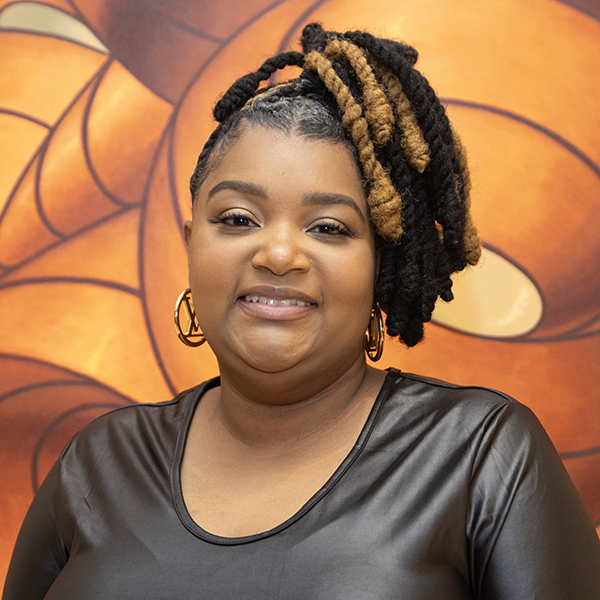 Simene‘ Walden, Educator & Speaker
Simene’, also known as The Student Teacher is an Educator, Top Youth Speaker, Restorative Partner & Consultant. She is an International Speaker & International Amazon Best Selling Author. Simene’ is a 2024 Presidential Lifetime Achievement Award Recipient and a 2026 Honorary Doctoral of Education Candidate. She has been recognized as a distinguished educator for the last decade of her twenty + years in public education providing an excellent education to students in underserved urban and rural communities. Simene’ is committed to helping educators and leaders see their worth beyond their work and their impact and influence beyond instruction to help produce a community of high performing and high-valued individuals who desire to make a difference within their sphere of influence.
|
| WEDNESDAY, APRIL 22, 2026 | 11:00 AM – 12:00 PM |
| Panel Discussion: Leading a New School from the Perspective of the Founding Principal: Lessons Learned |
| |
RMG Ballroom
Three principals of new schools will provide insights into what they learned from ushering in a new school, their perspective on the effectiveness of design features, and what they would like to have changed related to building features and furnishings. They will further share what supports were or could have been provided and what post-occupancy reviews could benefit future projects.
Learning Objectives:
- Identify effective and less effective design features.
- Identify effective and less effective furnishings.
- Identify what supports architects and designer did or could provide pre-occupancy.
- Identify what supports architects and designer did or could provide post-occupancy.
 Carol Cash, Professor of Practice, Virginia Tech
Dr. Cash is a life-long educator, serving at all levels of public education, both within the United States and internationally. She has been recognized as Virginia’s Secondary Principal of the Year and Zama’s Teacher of the Year in Japan. She has degrees from the University of South Alabama, George Washington University, and Virginia Tech, and is a Professor of Practice for Educational Leadership at Virginia Tech. She continues to pursue research on educational facilities.
 Michael Kelly, EdD, Principal, Stafford Schools
Dr. Kelly is currently principal of Hartwood High School in Stafford, Virginia. Mike is also the Past President of the Virginia Associate of Secondary School Administrators (VASSP). Previously, Dr. Kelly was a clinical associate professor for Virginia Tech in the School of Education, and an assistant professor of Educational Leadership at Regent University. Dr. Kelly also served as the principal of Frank W. Cox High School and Lynnhaven Middle School, both in Virginia Beach.
 JR Raybold, Principal, Stafford Schools
JR is currently principal of Crow's Nest Elementary School in Stafford, Virginia, where he has spent 24 years, dedicating his career to education as a classroom teacher and assistant principal before most recently serving as the Principal at Conway Elementary School. In this role, he successfully established and maintained a positive school culture, fostered deep community and family relationships, and has been a mentor to the next generation of educational leaders.
 Karen Bingham, Principal, Stafford Schools
Karen is currently principal of Falls Run Elementary School in Stafford, Virginia. For 27 years, she has been driven by a belief that every school holds the potential for greatness when educators feel valued, students are seen, and families feel at home. Karen specializes in “finding the rhythm” of a school to spark cultural transformation. From spearheading the division’s first Dual Language Immersion program to mentoring aspiring educators, she models the courage to learn.
|