Reimagining Learning Spaces with AI
Workshopping an Inclusive Approach to Student-Centered Design
Artificial Intelligence (AI) technology is revolutionizing how we learn, work, and experience the
world around us. When integrated thoughtfully into education and design, AI offers a powerful
opportunity to reimagine learning spaces with the most important voices at the center: the
students. By providing equitable access to AI technology, we can create learning environments that
cater to all backgrounds and abilities, empowering students with new tools and language to
express their ideas.
The Power of AI and Education
AI is already making significant strides in the educational landscape. Personalized learning tailors
educational content to meet the unique needs of each student, adapting to their learning pace and
style, and provides additional resources outside of the classroom. Interactive educational content,
powered by AI tools, creates engaging and dynamic learning experiences, making education more
hands-on and fun. Additionally, AI supports teachers by streamlining administrative tasks, offering
insights into student progress, and providing resources for instruction.
However, like any technology, AI comes with its drawbacks. Biased data can perpetuate inequalities
present in the systems they are trained on, potentially leading to unequal outcomes. Inaccuracies
can sometimes produce incorrect or misleading results for young learners who lack the knowledge
or life experience to sift through the information. Despite these drawbacks, the positive outcomes
of AI in education are substantial. AI encourages students to explore their creativity by providing
tools that bring their ideas to life; it facilitates better communication and understanding between
students and educators; it creates a more collaborative learning environment. AI also ensures that
students from diverse backgrounds and abilities can participate and provide input in meaningful
ways, amplifying diverse voices.
"AI has the potential to transform education by breaking down barriers, personalizing learning, and
creating opportunities for all students—if we ensure its use is inclusive, equitable, and mindful of
every learner's unique needs," said Dave Tebo, Director of Innovation Services at Ottawa Area
Intermediate School District (OAISD).
Designing an AI Empowered Student Workshop
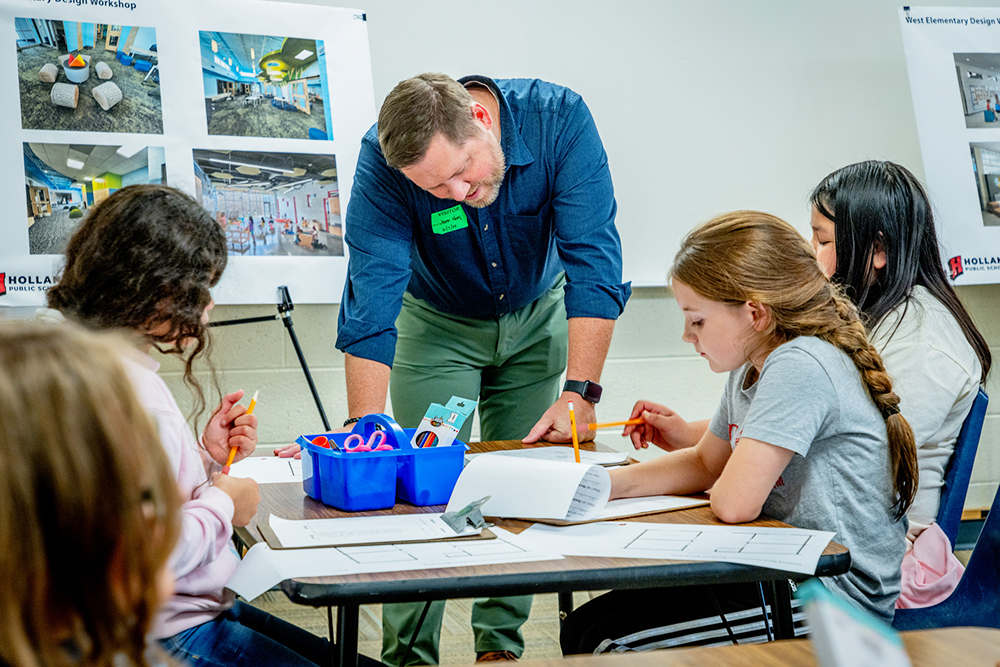
Members from GMB’s design team, alongside Dave Tebo and elementary educators, conducted an
AI-empowered student design workshop at Holland Public Schools. The district, where 66% of
students are economically disadvantaged and 18% have disabilities, exemplifies the need for
inclusive and equitable learning solutions. The workshop focused specifically on West Elementary,
a school currently lacking collaboration spaces essential for fostering student interaction and
teamwork. With a planned renovation, the objective was to incorporate student input into the
design of grade-level extended learning areas (ELA) within the school.
The workshop aimed to engage K-5th grade students in the design process, empowering them to
express their ideas and preferences, learn basic design concepts, and collaborate with
professionals to bring their visions to life. Inclusive participation was paramount, allowing every
student, regardless of background or ability, to have a voice in the design process. A lesson plan codesigned
with district staff ensured alignment with their educational goals and included the
development of a curriculum tool that the district can use for future student-led projects.
The workshop was structured into 18 separate sessions, each lasting 45 minutes, conducted during
STEM class periods. Students from kindergarten through 5th grade participated in visioning
exercises that helped them imagine their ideal learning environment through storytelling and vision
boards showcasing other inspirational student spaces. Students would then spend time ideating
through drawing, writing, or using symbols or speech to express their ideas. The designers and
educators assisted students in turning their brainstormed ideas into simple sketches or drawings
and creating language to prompt the AI program. The workshop activities were tailored to meet the
different needs of students — kindergarteners focused more on pictures, while 4th and 5th grade
students were able to express ideas in writing or floorplan design.
Students were asked to formulate themes for the types of spaces they wanted to see. Common
themes included learning spaces that emulated a forest, beach, outer space, treehouse, robots,
and underwater. Students would gasp and squeal with delight when the AI-generated designs
would pop up on the screens, showing their ideas come to life in real-time. Comments of “I would
want that!” or “It looks really realistic,” would echo throughout the classroom. Children from each
age range were visibly inspired and engaged with the program, providing the team with several
thematic and design ideas to include in the future learning spaces.
What Comes Next?
Post-workshop, the collected ideas and feedback will be used to inform the design elements of the
new extended learning areas at West Elementary. This collaborative approach not only encourages
engagement with the learning environment but also instills a
sense of agency and pride among
students. By leveraging AI technology, we can ensure that all students, regardless of their abilities
or backgrounds, have the opportunity to contribute their ideas. This approach not only fosters
creativity and autonomy but also sets the foundation for a more inclusive and dynamic educational
experience.
“Seeing the kids’ faces light up and get excited about the possibilities of their future learning spaces
was inspiring to be a part of” added Jeff Hoag, educational planner with GMB, “Every student learns
differently and giving them the tools they need to express their needs and wants will make a big
difference in how the experience learning.”
AI is not just a tool for enhancing learning; it’s a means to create a more equitable and inclusive
educational environment. By incorporating AI into the design process, we can ensure that every
student's voice is heard and valued, leading to learning spaces that truly reflect the needs and
aspirations of all students.
Student Workshop: Kindergarten / 1st Grade Ideation
Student Workshop: 2nd / 3rd Grade Ideation
Student Workshop: 4th / 5th Grade Ideation
Student Workshop: AI Prompting
Student Workshop: Outcomes
About the Authors
 David Tebo, Director of Innovation Services, Ottawa Area ISD
David is the passionate Director of Innovation Services for the Ottawa Area Intermediate school District (OAISD) in West Michigan. He spent 15 years as a district superintendent relentlessly seeking ways to meet the needs of EACH student so they can THRIVE. David has been an elementary teacher, building principal, the President of MASA, and currently sits on the Board of Lakeshore Advantage and the Board of the Great Ottawa County United Way.
 Jeff Hoag, AIA, LEEP AP, Educational Planner, GMB
Jeff is an Educational Planner with GMB and works within our K12 and Higher Education teams. Jeff partners with design teams to examine client’s education needs, current learning environments, and curricular enhancements. He has a deep understanding of the educational ecosystem and a passion for helping school communities support students and transformational educators. An architect by training, Jeff has worked with educational institutions for more than 20 years, impacting educators and students across the Midwest.